
Detecting, Deterring and Mitigating AI Dishonesty in the Classroom
Event Details
As artificial intelligence tools become more sophisticated and accessible, faculty face a growing challenge: How can they protect academic integrity without relying on detection tools that may be inaccurate or spending valuable time policing student work?
Join Strategic Ohio Council for Higher Education (SOCHE) on Wednesday, Nov. 18, at 2 p.m. ET for the virtual training, “Detecting, Deterring & Mitigating AI Dishonesty in the Classroom,” presented by Dr. Mary Myers, director of the Doctor of Strategic Communication program at Regent University.
This practical session will help faculty address AI-related academic dishonesty from multiple angles. Participants will explore how to recognize potential signs of unauthorized AI use, reduce opportunities for misuse through thoughtful course and assignment design, and respond fairly and consistently when concerns arise.
With AI tools evolving faster than many institutional policies, faculty need strategies they can put into practice now. Rather than depending solely on imperfect AI-detection software, participants will learn proactive approaches that can reduce misuse while supporting academic integrity. The session also will provide adaptable language for syllabi and assignment prompts, giving faculty useful starting points they can apply in their own courses.
Learning Goals
By the end of this session, participants will be able to:
- Identify common indicators of AI-generated or AI-assisted student work and explain key limitations of AI-detection tools.
- Apply at least two practical strategies for redesigning assignments to reduce opportunities for AI misuse.
- Draft clear expectations for appropriate AI use in a syllabus or assignment prompt.
- Outline a fair and consistent process for addressing suspected cases of AI dishonesty.
No matter your current level of AI expertise, you’ll leave with concrete ideas for creating clearer expectations, designing more AI-resilient assignments and handling suspected misuse with greater consistency. Register today and gain strategies, language and tools you can begin incorporating into your courses right away.
Registration for this session will close on Sunday, Nov. 15. [If you are unable to attend live, a recording link will be sent to all registrants.]
When: Wednesday, Nov. 18, from 2 to 3:30 p.m. ET [If you are unable to attend live, a recording link will be sent to all registrants.]
Where: SOCHE Zoom Platform [Link sent at least 24 hours prior to event.]
Cost
- Personnel from SOCHE Member Schools: $10
- Personnel from NON-Member Schools/Orgs: $20
- Students: $5 [Note: This fee is is reserved for individuals who are students only, not for personnel pursuing continuing education.]
Questions? Contact Mindy Claggett at SOCHE
Student Registration Fee Policy
Registration Cancellation Policy
REGISTRATION FOR THIS EVENT WILL CLOSE ON SUNDAY, NOV. 15
About the Presenter
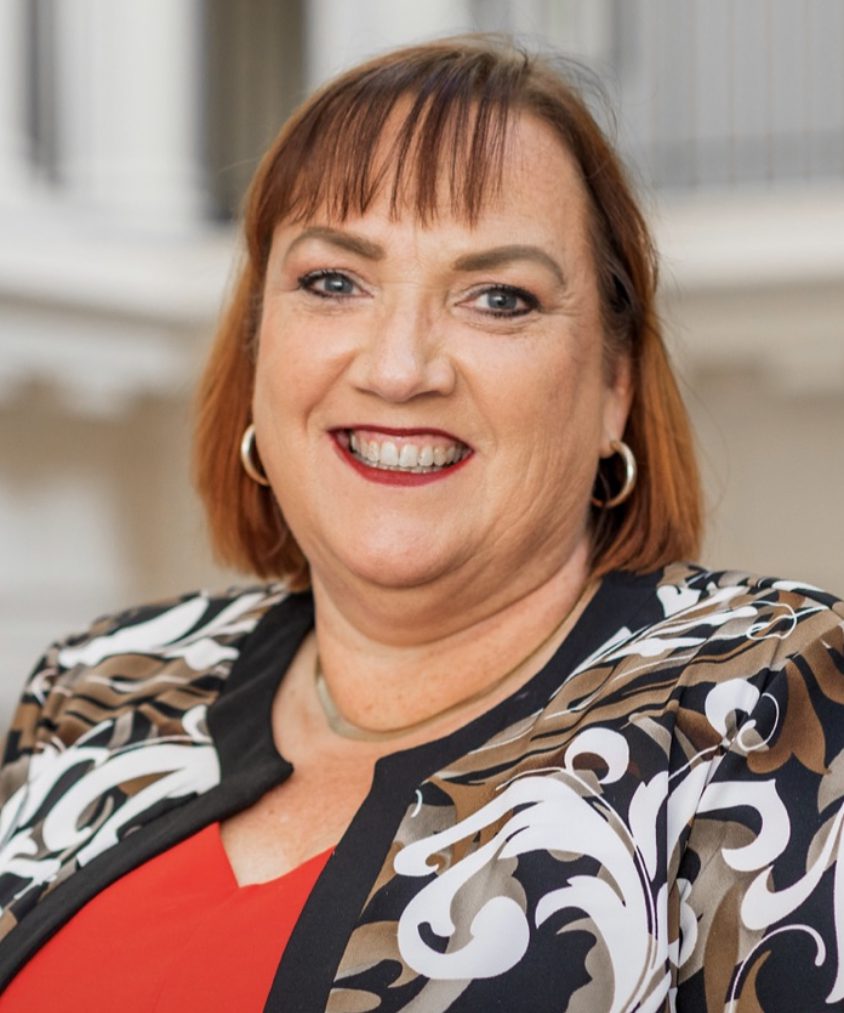
Mary E. Myers, Ph.D.
Assistant Professor, Journalism & Communication Studies
Director, Doctor of Strategic Communication Program
Regent University
Dr. Mary Elizabeth Myers is an Assistant Professor and Director of the Doctor of Strategic Communication (DSC) program at Regent University’s School of Communication & the Arts, where she designed and launched the nation’s first applied doctoral program in strategic communication. Her research and teaching increasingly focus on artificial intelligence in higher education, including course design, ethical use, and student mentorship. She chairs the AI Special Interest Group for the Broadcast Education Association (BEA) and serves as a reviewer for the Teaching and Learning with AI Conference. Dr. Myers has presented on generative AI at the Teaching and Learning with AI Conference in both Orlando, Florida, and Breda, the Netherlands, addressing topics such as ethical editing, interviewing history with AI tools, and detecting AI dishonesty in the classroom. Her broader research interests include crisis communication, media psychology, and parasocial attachment. She holds a Ph.D. in Communication from Regent University and an M.A. in Mass Communication from the University of Central Florida.