
AI WEBINAR SERIES – AI for Student Success: Creating Durable Skills and Effective Study Habits
Event Details
With increased interest in and use of artificial intelligence (AI) in higher education, demand also has grown for better understanding of the opportunities and challenges presented in this space. To help higher education professionals navigate this rapidly evolving landscape, the Strategic Ohio Council for Higher Education (SOCHE) will feature a special AI Webinar Series for the 2026-27 school year.
The fifth and final session in the series, “AI for Student Success: Creating Durable Skills and Effective Study Habits,” will be held on Friday, April 9, from 12 to 1 p.m. ET via Zoom. The webinar will be presented by Dr. Amanda Duselis and Lindsay Tate from the AI Excellence Institute at Sinclair College.
Students don’t always struggle because they lack information. Often, the challenge is that they haven’t been taught how to study effectively, organize their time, persist through frustration, or assess their own understanding. These durable skills can make the difference between struggling with course material and developing the habits needed for long-term academic success.
At the same time, students increasingly are turning to AI tools on their own, with or without guidance from their instructors. This session will explore how educators can help students use AI responsibly as a support for stronger study habits rather than as a shortcut around the learning process.
Amanda and Lindsay will share early results from a pilot underway in a Sinclair Anatomy & Physiology course, where sections completing Sinclair’s AI 101 coursework and a structured learning-preferences assignment are being compared with sections that did not receive the additional coursework. Attendees will see examples of the assignments used in the pilot and explore active-recall strategies such as explaining concepts aloud, concept mapping and the “what if” game. Each strategy can be paired with an optional AI tool, such as Gemini Notebook (formerly NotebookLM), or a chatbot prompt designed to help students check their own reasoning instead of doing the thinking for them.
The presenters also will demonstrate what responsible, verification-first AI use can look like in a study context and discuss what the comparison data is showing so far about student performance and confidence. Participants will leave with practical, subject-agnostic templates that can be adapted for courses across two-year and four-year institutions, as well as K-12 classrooms.
Learning Goals
By the end of this session, attendees will be able to:
- Identify at least three durable-skill gaps, such as organization, persistence and self-testing, that commonly undermine student success and explain how targeted study-skills coursework can address them.
- Explore early comparative data from a live Anatomy & Physiology course pilot examining how embedded AI 101 and learning-preferences coursework relates to student performance compared with sections that did not receive the additional coursework, and consider how these findings could apply in other classroom settings.
- Examine specific active-study techniques, including explaining concepts aloud, visual drawing, connection mapping, question generation, stories and analogies, and “what if” scenarios, along with optional AI prompts that complement each technique.
Help students build stronger study habits in an AI-enabled learning environment. Register today to explore practical strategies, adaptable resources and responsible approaches to AI that can support lasting student success.
Registration for this session closes Tuesday, April 6.
[If you are unable to attend live, a recording link will be sent to all registrants.]
When: Friday, April 9, from 12-1 p.m. ET [If you are unable to attend live, a recording link will be sent to all registrants.]
Where: SOCHE Zoom platform [link sent at least 24 hours prior to event]
Cost:
- Personnel from SOCHE member schools: $5
- Personnel from NON-member schools/organizations: $10
- Students: FREE [Note: This fee is is reserved for individuals who are students only, not for personnel pursuing continuing education.]
Questions? Contact Mindy Claggett at SOCHE
Student Registration Fee Policy
Registration Cancellation Policy
REGISTRATION FOR THIS EVENT WILL CLOSE ON TUESDAY, APRIL 6
About the Presenters

Amanda Duselis, Ph.D.
Associate Professor of Biology/Biotechnology | STEM AI Excellence Institute Faculty Fellow
Sinclair Community College
Dr. Amanda Duselis has been part of Sinclair Community College since 2010 and became a tenure-track faculty member in the Biology and Biotechnology Department in 2018. She earned a Bachelor of Science in Biology from Purdue University and a Ph.D. in Developmental Genetics from the University of California, Irvine. At Sinclair, she has taught a wide range of biology courses while also contributing to campus committees, grants, and leadership initiatives. Amanda is currently serving as the STEM Faculty Fellow for Sinclair’s AI Excellence Institute and is Chair of Women in STEM camp. She leads a faculty team developing a corequisite course for Principles of Anatomy and Physiology through the Ohio Strong Start to Science grant.
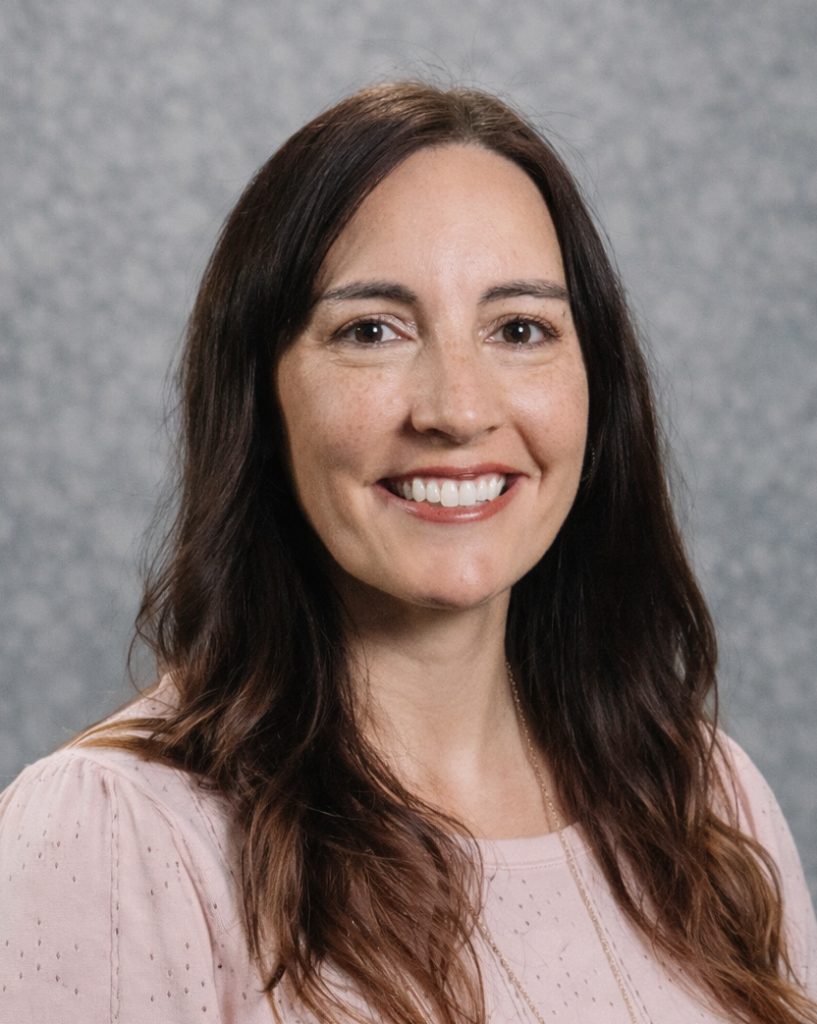
Lindsay Tate
Associate Director of Partnerships, AI Excellence Institute | eLearning Division
Sinclair Community College
Lindsay Tate has over 20 years of experience in higher education/adult education and is currently the Associate Director of Partnerships for the AI Excellence Institute at Sinclair College where she creates and facilitates AI trainings for internal and external participants. Prior to this role, she was the Senior Manager for Learning and Development/ Lead Consultant and Learning and Development Consultant in Workforce Development at Sinclair, providing leadership training, coaching and consulting to individuals and organizations. Lindsay holds a Bachelor of Art in Business/Marketing from Transylvania University and a Master of Science in Education from the University of Dayton.